About
Econosphere 2V is a simulation-gaming mobile app designed to teach entrepreneurship based on a demand-driven market model. Originally an offline event involving hundreds of participants, this project translates the economic decision-making game into a scalable digital product for broader access, especially among university students
Problem & Goal
The core challenge was translating a complex offline simulation (rich with face-to-face interactions, physical exchanges, and emotional dynamics) into a coherent and engaging mobile app experience. The Project Owner needed a way to simulate economic decision-making in a digital format that still felt intuitive and competitive, without losing the experiential learning aspects
Key Challenges
How might we turn a complex, hands-on simulation involving physical tokens and peer-to-peer trade into a seamless, intuitive digital experience, without losing its market dynamics or educational value?
Key constraints:
No prior UX model to reference, fully custom system
Tight logic between user roles, time constraints, and market actions
Bridging macro and microeconomic systems into gameplay
Design Process
Understanding the Offline Simulation
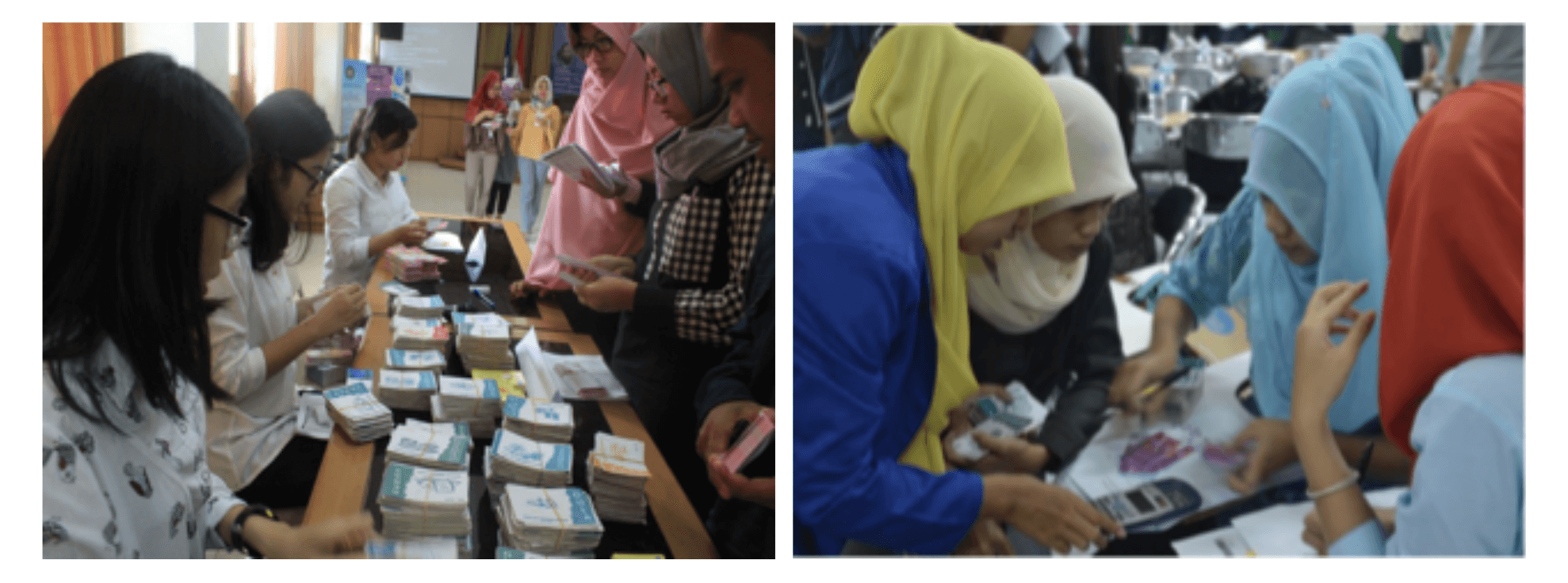
Before jumping into screens, I immersed myself in how the original simulation worked:
Watched real event footage and participant interactions
Analyzed printed game mechanics (e.g., how physical money and commodity cards were exchanged)
Mapped the ecosystem: players, facilitators, banks, markets, and transactions
🎯 Goal: Ensure the digital experience retained the decision-making pressure, competition, and role-play essence of the physical game
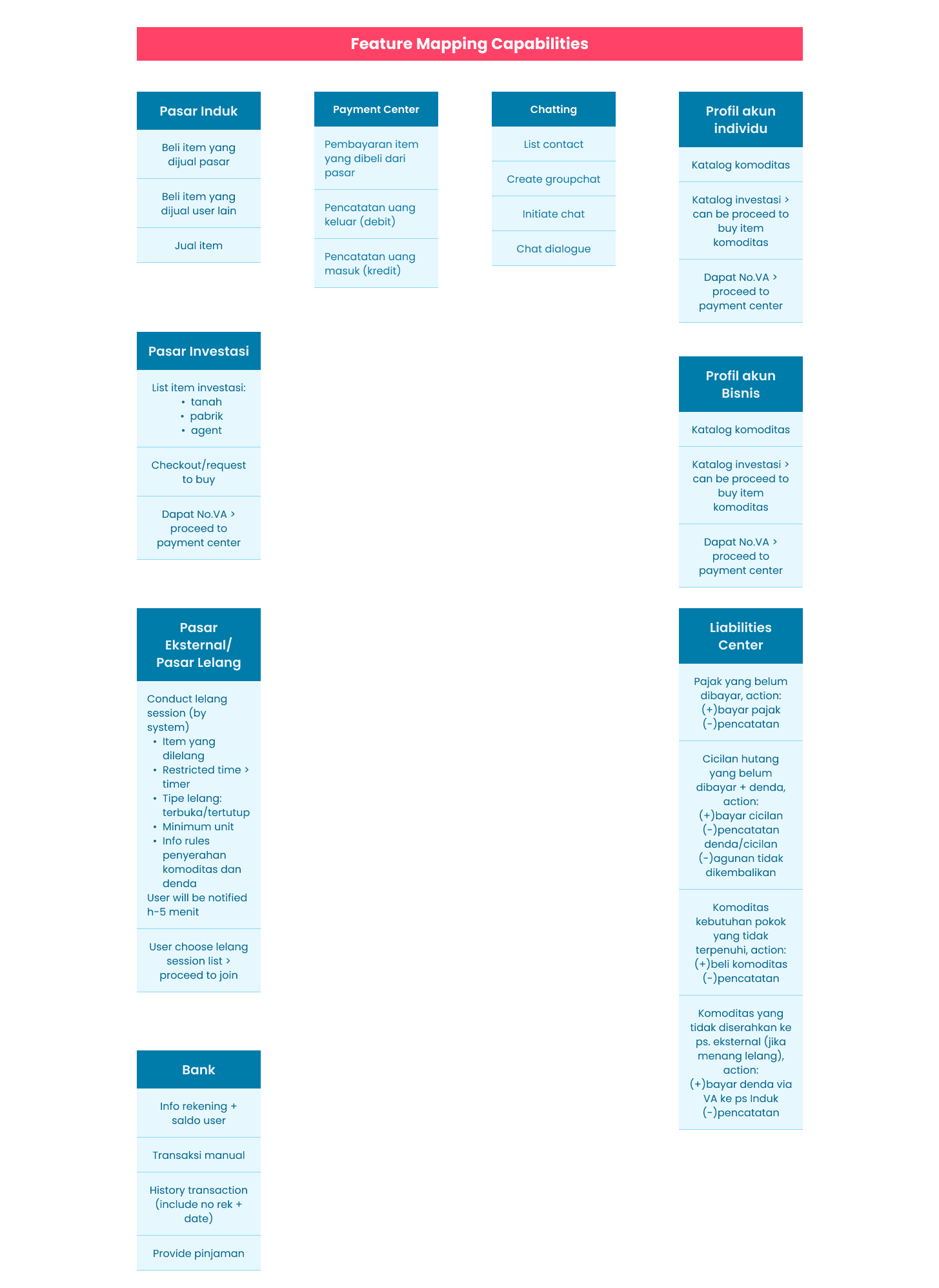
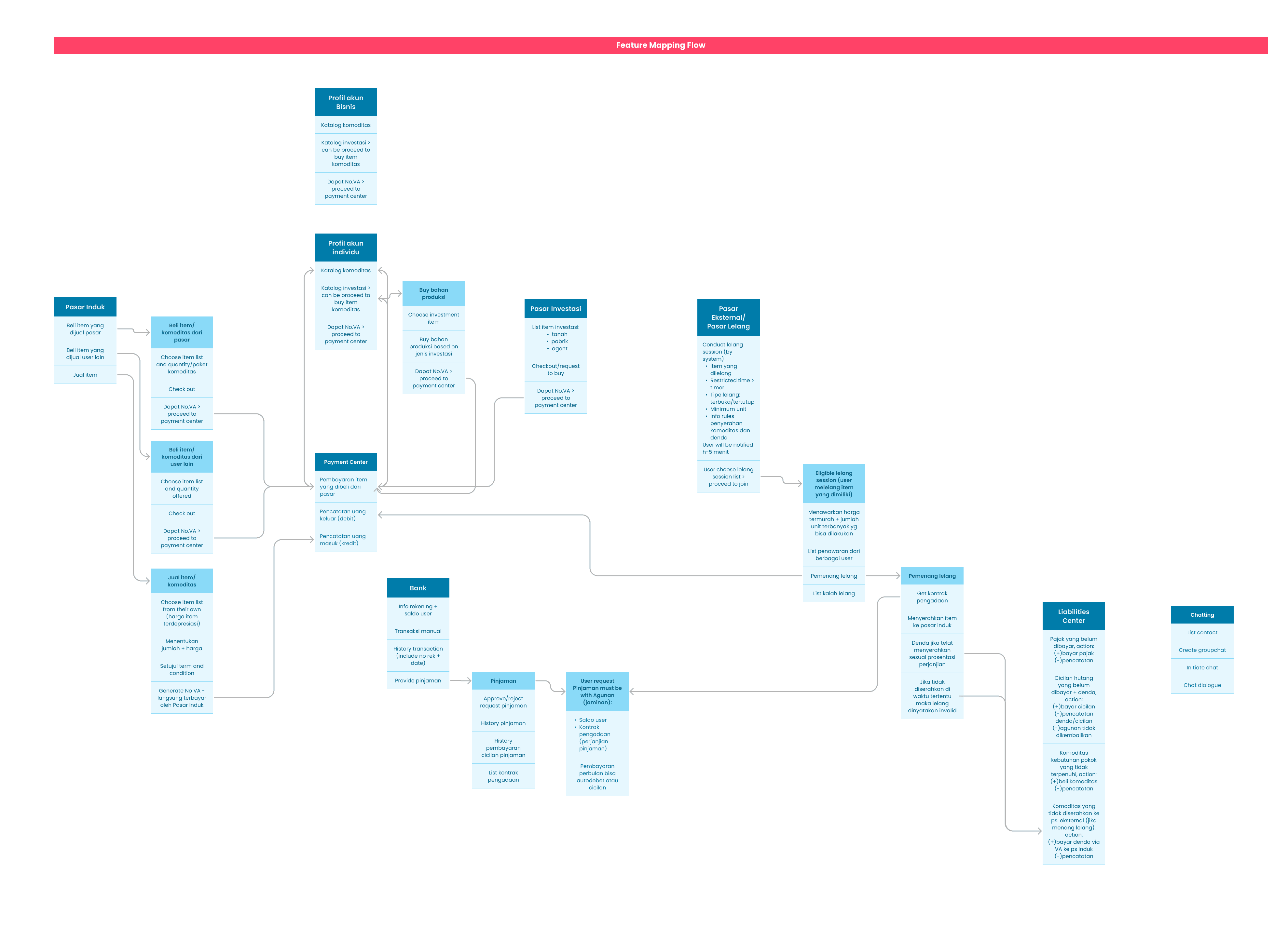
System Mapping & Feature Translation
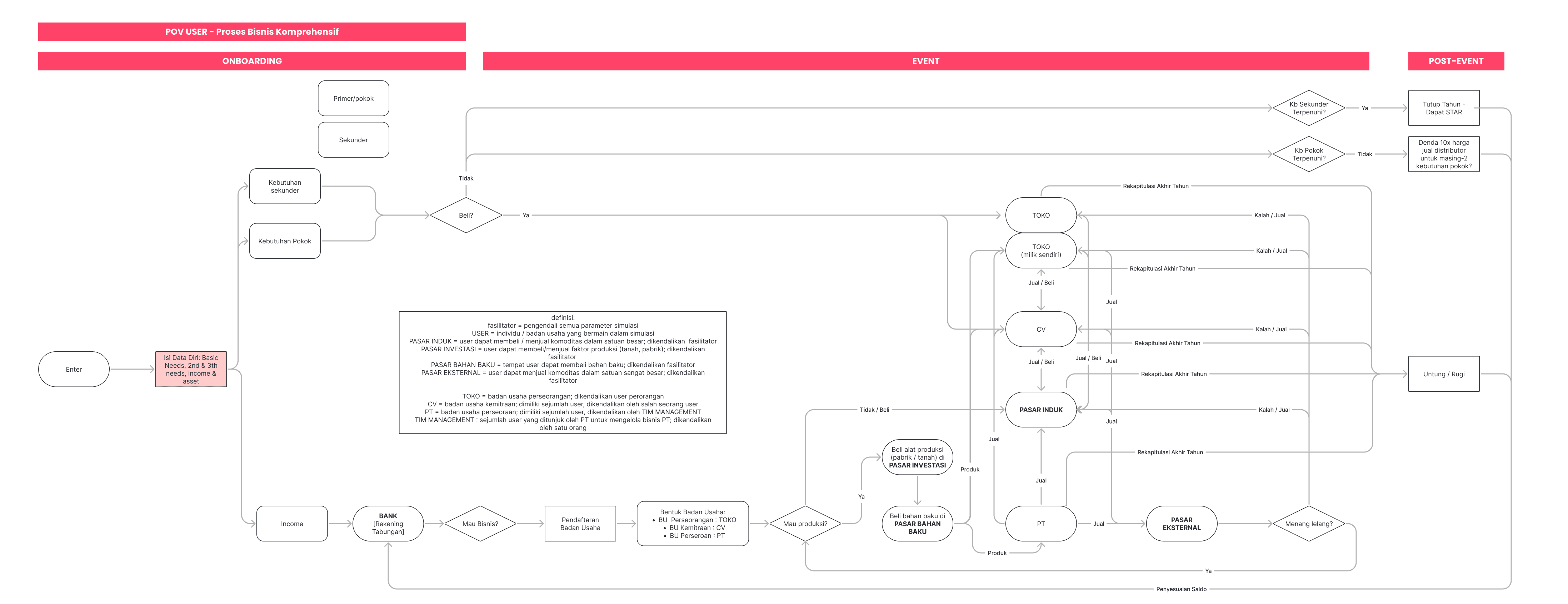
The offline Econosphere featured complex flows—banking, investment, trade, production, and consumption
Broke down each economic entity into modules (e.g., Bank = Create Account, Loan, Balance Check)
Sketched out system relationships and user roles (e.g., Market Facilitator vs. Player)
Identified minimum viable features to replicate the learning goals
🎨 This step was crucial in converting abstract macroeconomic mechanics into actionable screens and UI components
User Flow & Scenario Drafting
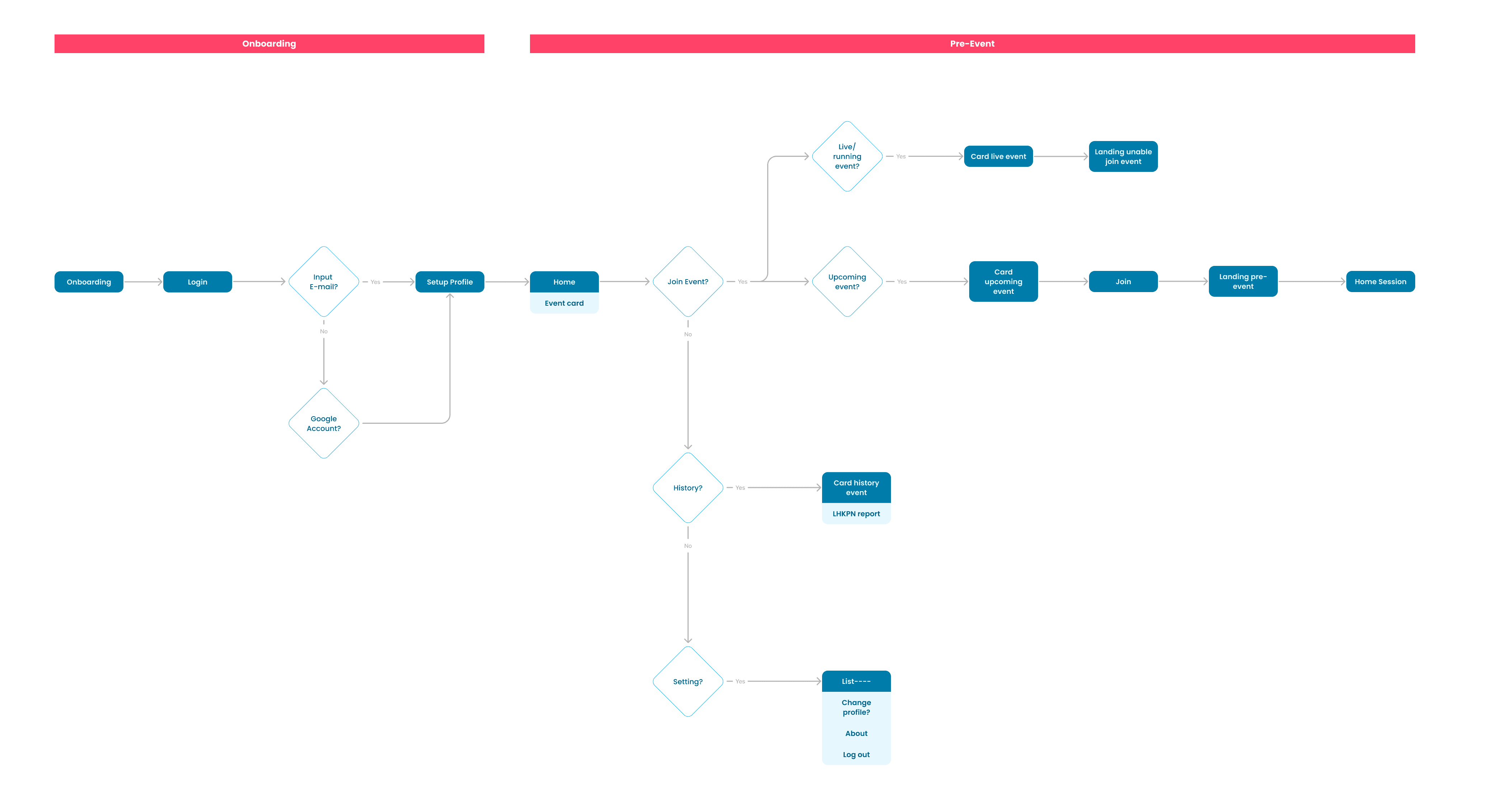
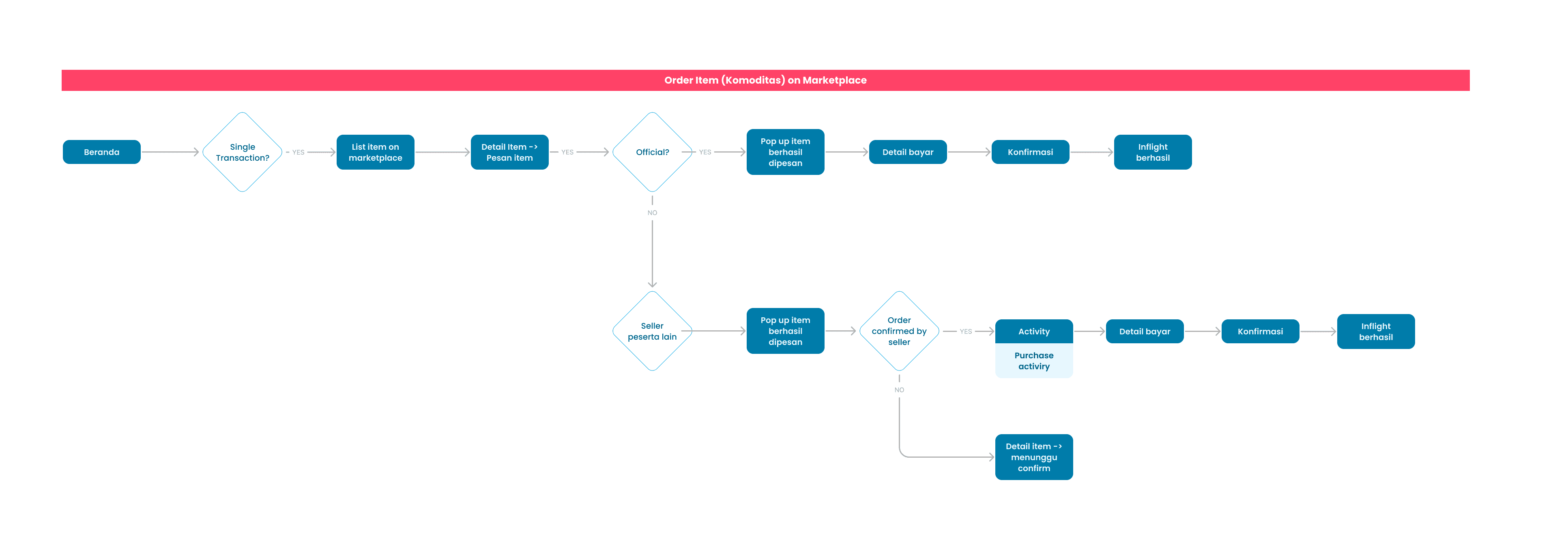
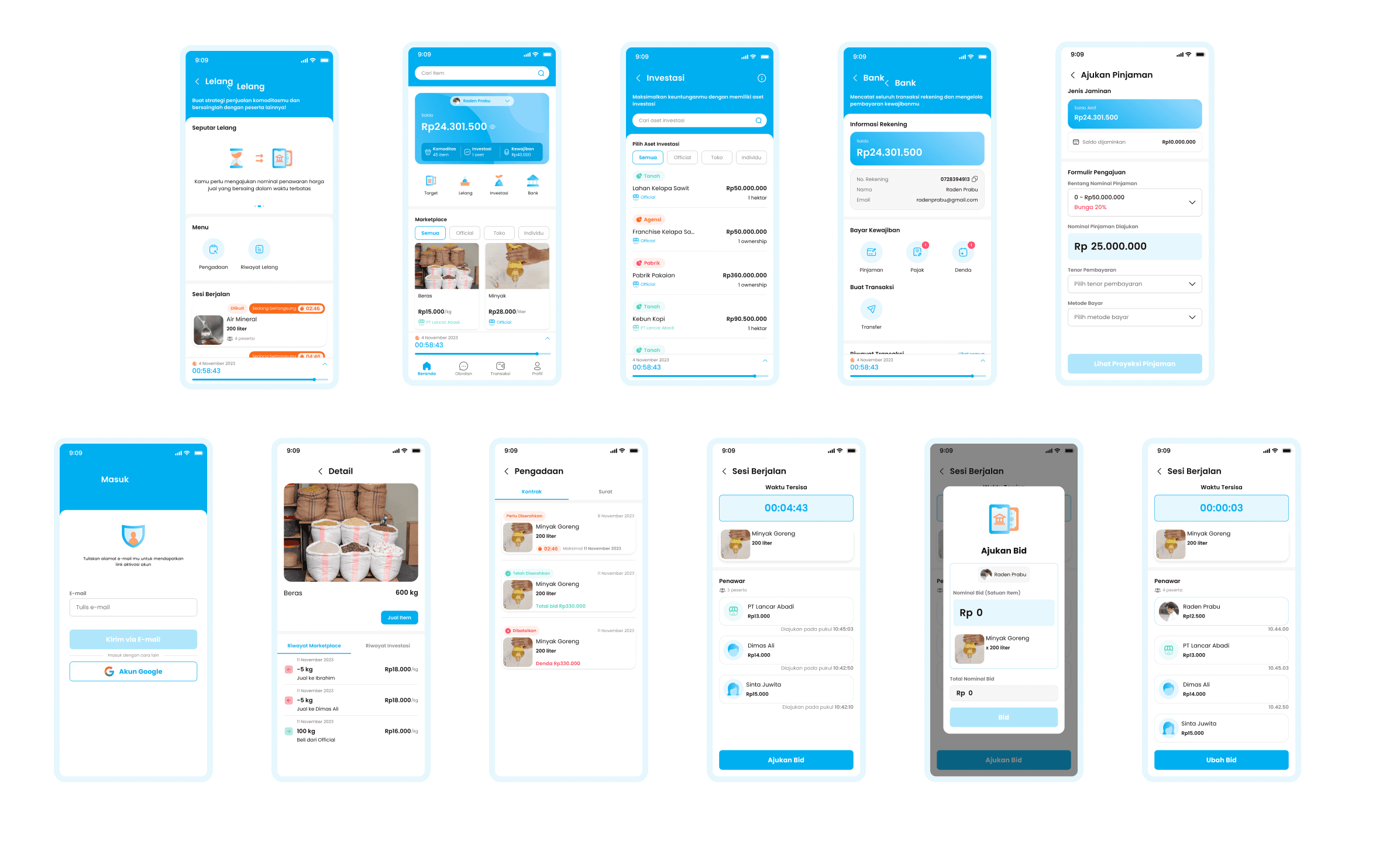
I created role-based user flows (Player, Facilitator, Admin) to simulate the full journey:
Joining a simulation round
Making economic decisions (buying, selling, negotiating)
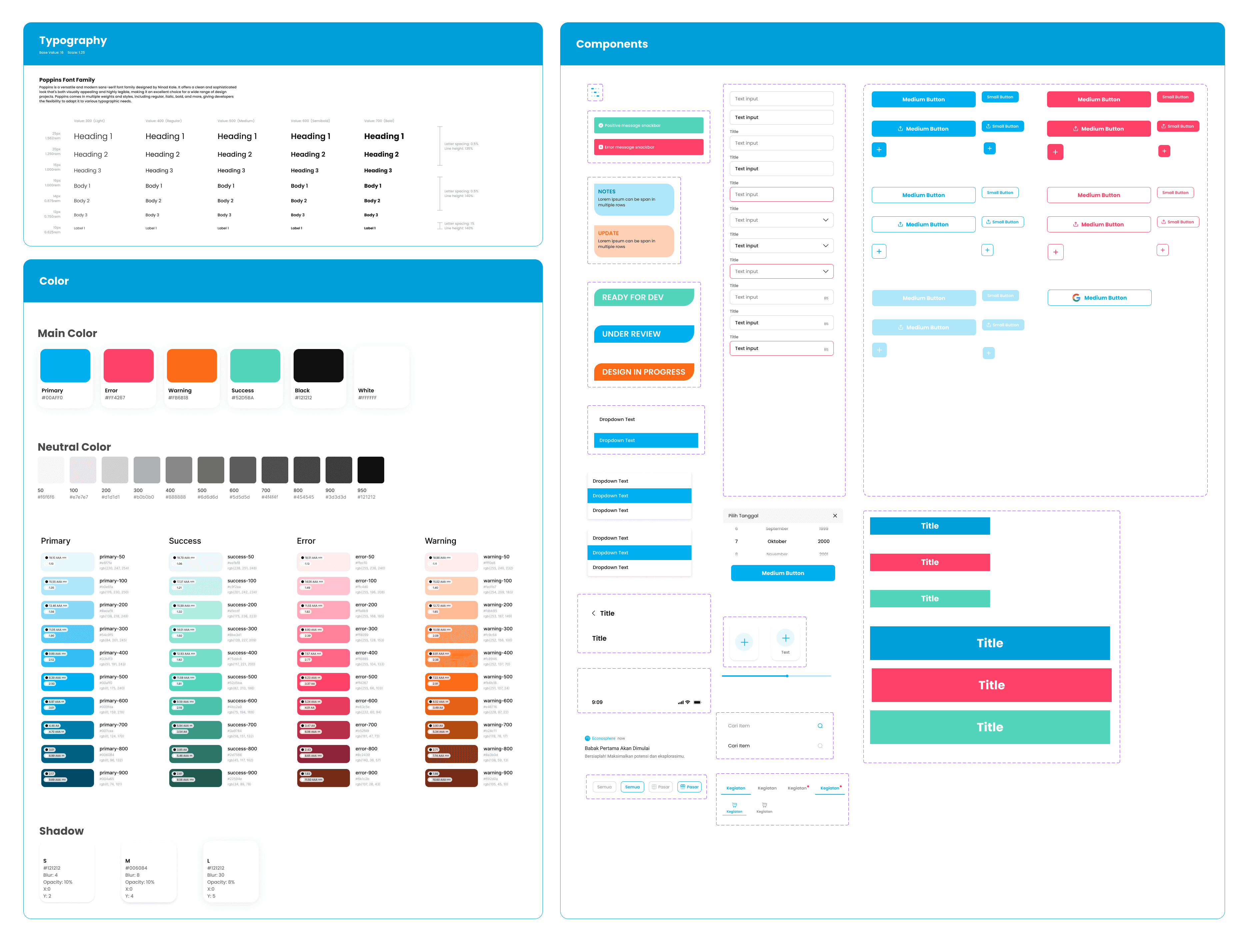
UI Design & Design System
Once flows were locked, ensured visual clarity for fast decision-making under time pressure
Developer Handoff & Collaboration
Worked closely with the developer:
Delivered annotated screens with expected interactions
Conducted review sessions to align feature logic with system behavior
Adjusted designs based on tech limitations and input validation feedback
Applying Behavioral Insights to UX
Recognizing the cognitive challenge of learning a new market-based simulation, I integrated psychological insights to shape the interface, minimizing information overload, aligning with common transactional mental models, and using contextual cues to ease decision-making under time constraints
Mental Model Mapping
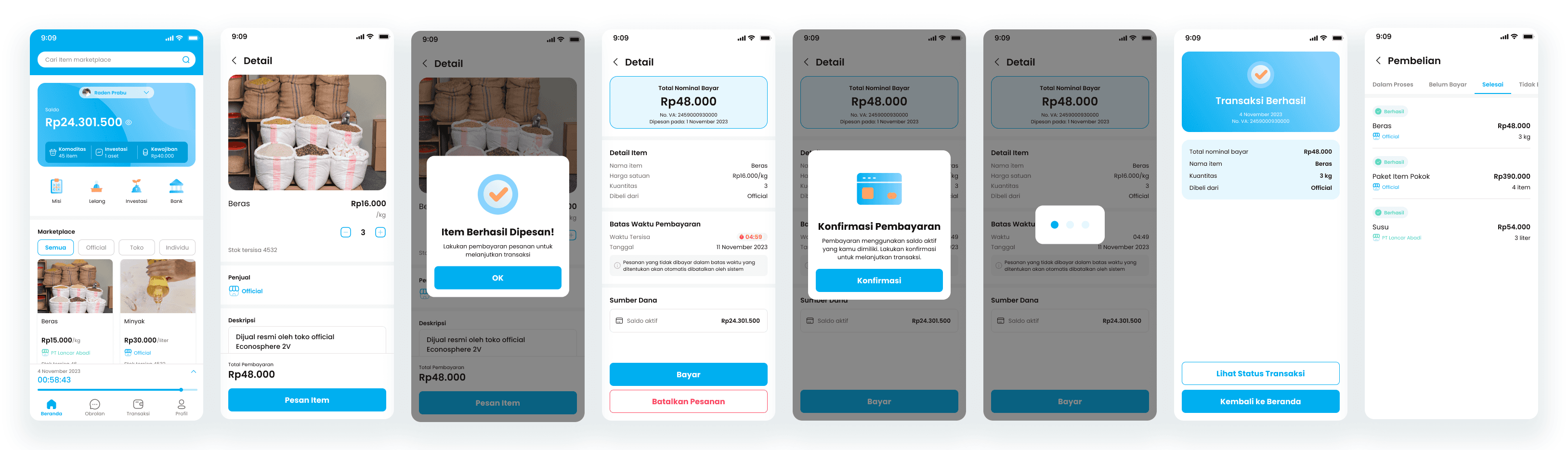
I adapted marketplace UX patterns from platforms like Shopee, Tokopedia, and Bibit, allowing players to transfer familiar behaviors to this new context
This alignment with existing mental models made the app more approachable and intuitive
Reducing Cognitive Load
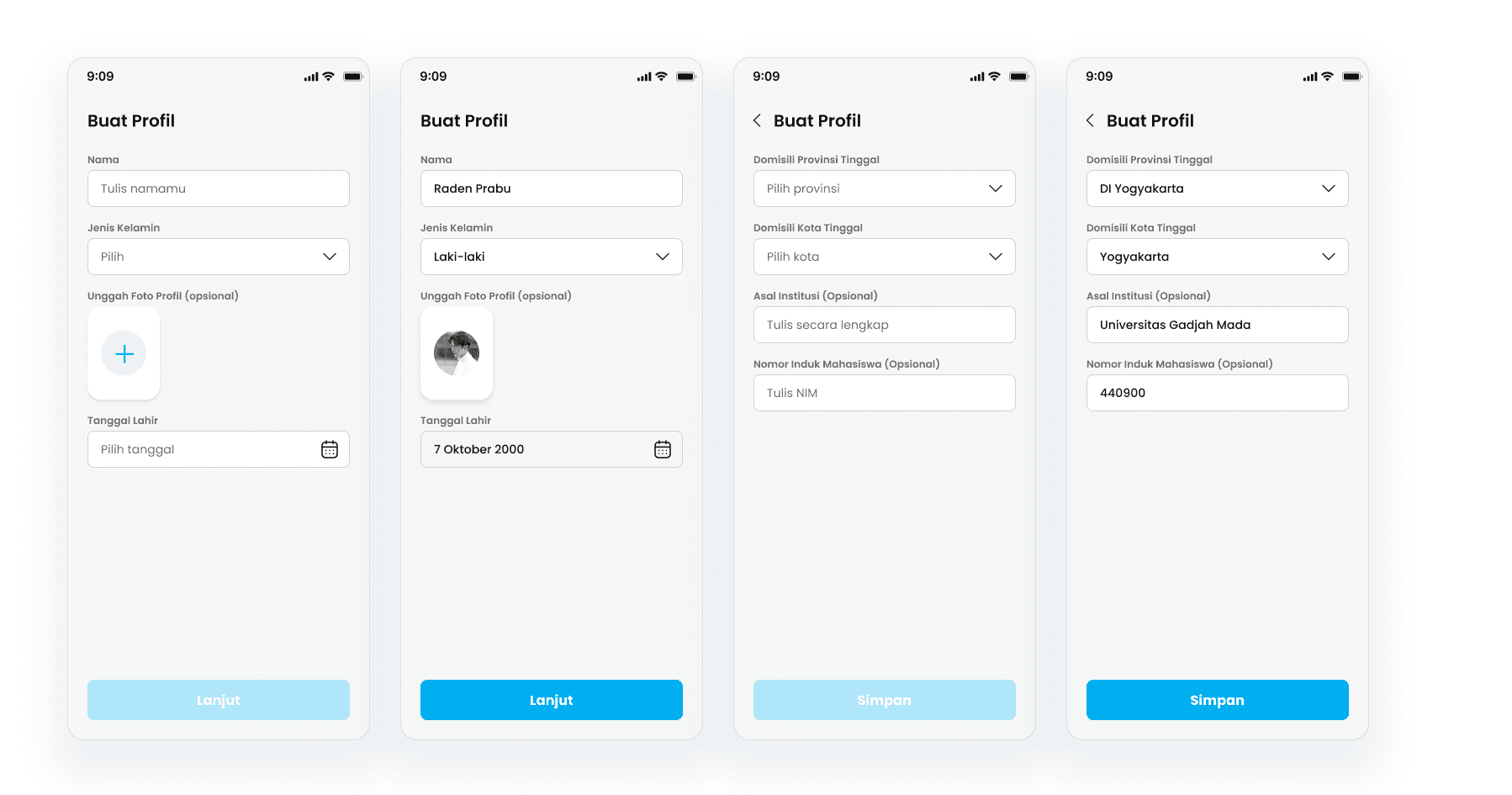
Capped dropdown options to no more than 5 items per screen to reduce mental effort
Used microcopy and brief role descriptions beneath each menu title to guide users without overwhelming them
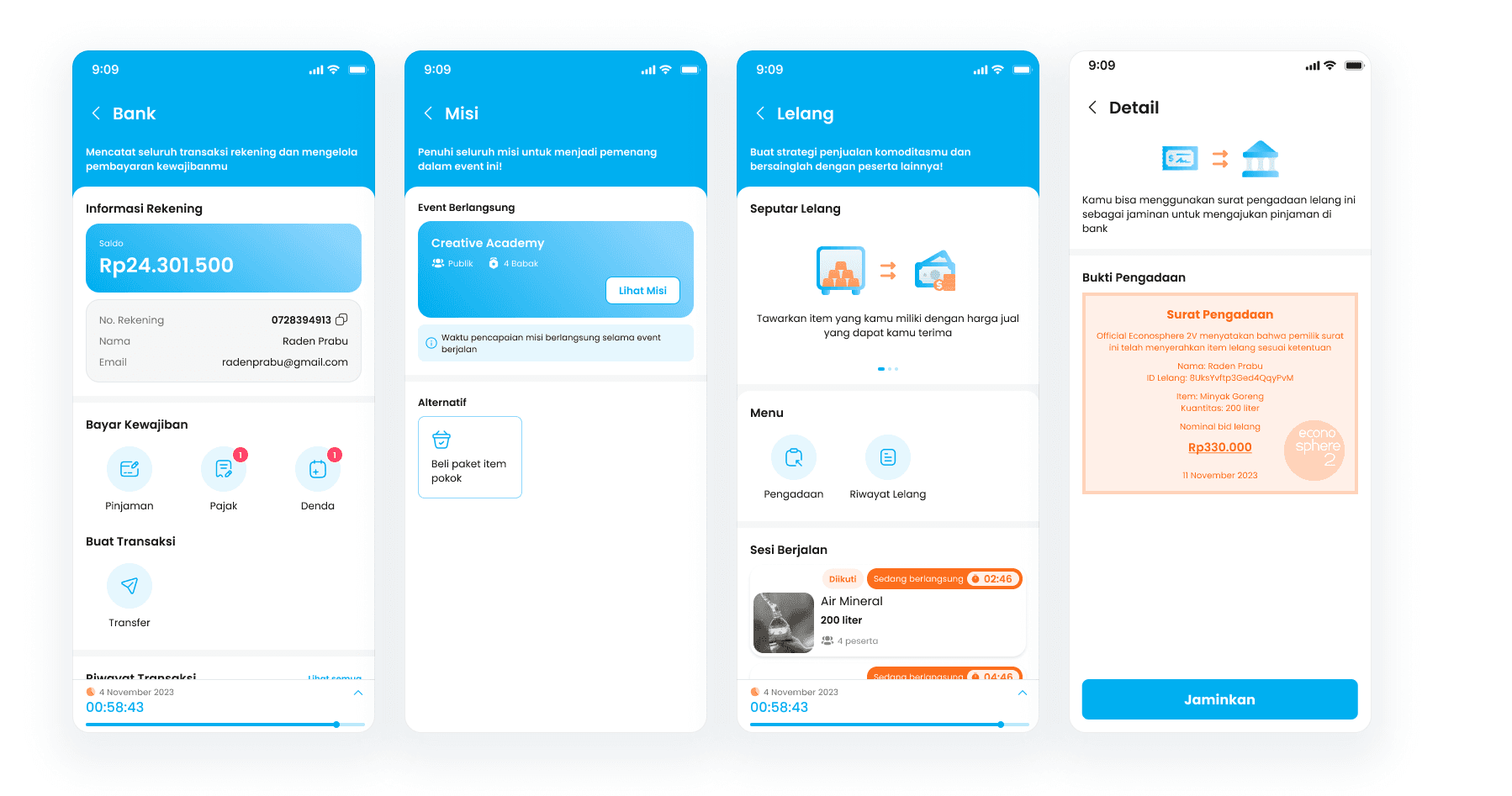
Creating Urgency Through Time Pressure
To reflect the original offline challenge, I implemented a visible countdown timer on key decision screens
This replicated real-time stress conditions from the simulation and encouraged quick, strategic thinking, a core skill the event aimed to develop

Final Outcome and Impact
The Econosphere 2V app is currently in the publishing process on Google Play. Although it hasn't been tested in a live event yet, the Project Owner acknowledged my ability to deeply understand the offline simulation and successfully translate its complexity into a usable digital experience. This trust reflects my strength in bridging conceptual ideas with functional and engaging product design
Lesson Learned
This project deepened more than just my design skills, it sparked a passion for understanding how people think and make decisions, especially in economic contexts. Translating a complex offline simulation into a digital format challenged me to dig deeper into mental models, particularly how users perceive value, scarcity, and time pressure when making financial choices.
As I learned the basics of micro and macroeconomics, I became more equipped to design transaction flows that not only work but feel intuitive and motivating to users.